
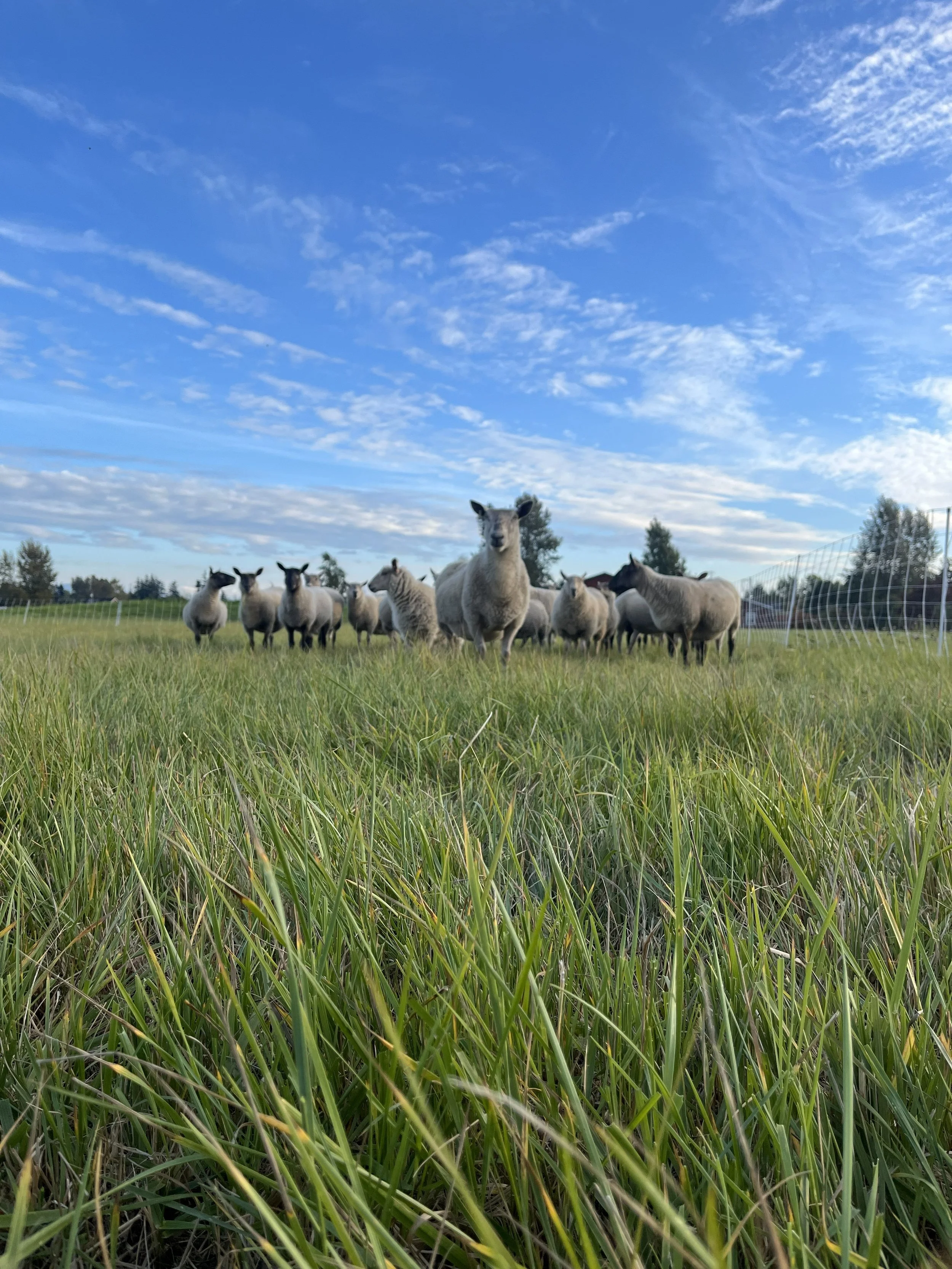
Through Link Lamb, we raise premium lamb for home cooks and chefs who care about flavor. As a fully mobile, landless operation, we graze more than 80 acres across Whatcom County each season, pairing great sheep genetics with diverse local pastures.
Every management decision begins in the pasture with one goal: producing exceptional lamb.
We believe better agriculture is built through collaboration—with landowners, neighboring farms, and fellow shepherds working together to strengthen Western Washington lamb.
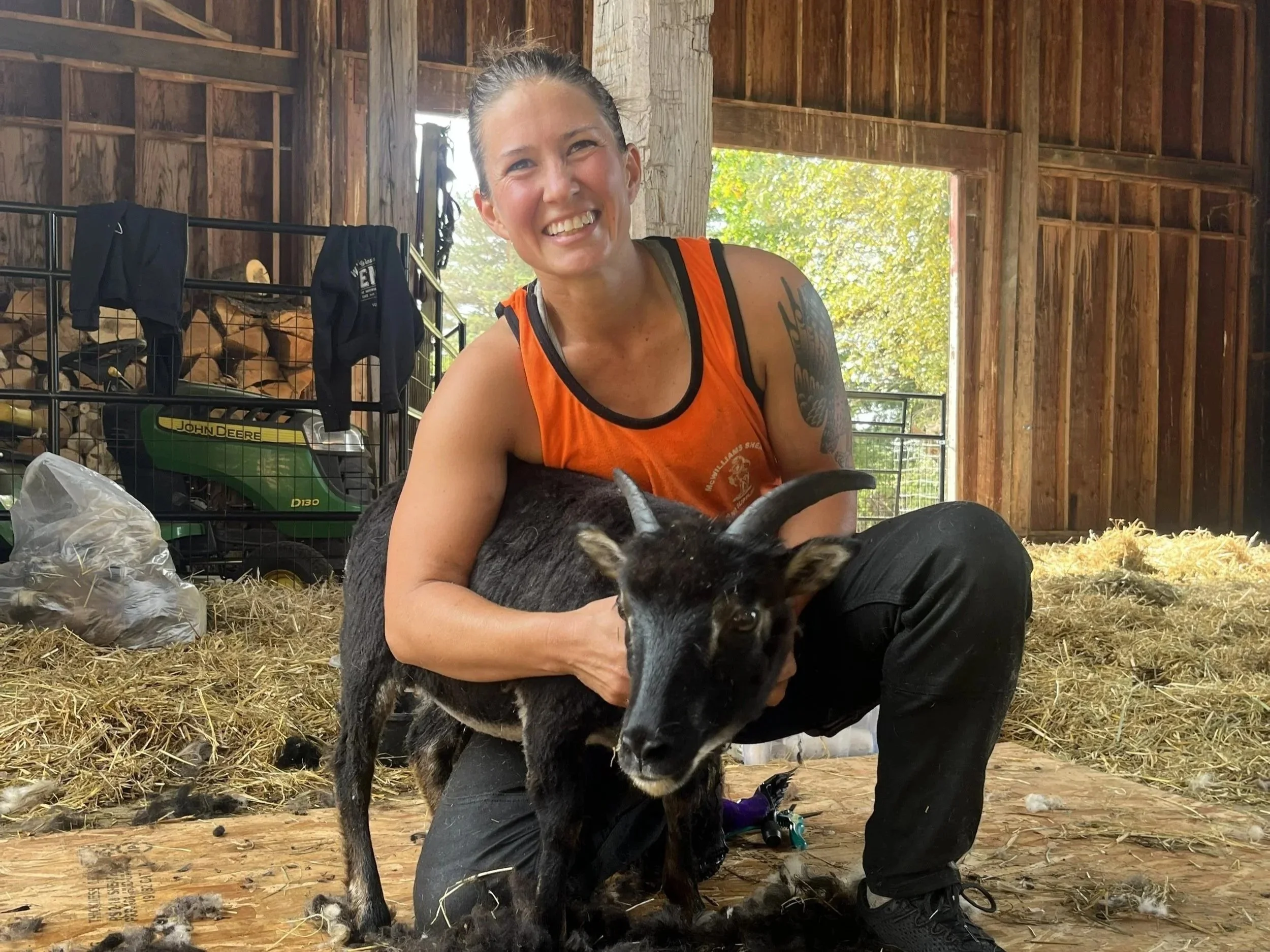
The Shepherd & Shearer
Elizabeth Link, Owner-Operator
What do you get when two plant scientists raise a kid in the grass seed capital of the world, fueled by James Herriot bedtime stories and a well-worn kitchen full of family recipes?
Thirty plus years later, you get Link Land & Livestock.
I grew up in the barley and small grains world, but more immediately surrounded by irrigated ryegrass, clover seed, and the diverse herbal leys that raise fat Willamette Valley lambs. Today, we’re adapting the best lessons from those pastures to the landscapes of Whatcom County, one field and one season at a time.
Over the past 12 years, I’ve worked across Pacific Northwest agriculture from mill floors and farmers markets to orchards, agronomy, commodity grains, new farmer training, and nursery sales. Frustrated by the cost of farmland in a county where an acre can push $50,000, I bought my first 40 sheep without a single acre to my name. We’ve been on the move ever since.
Link Land & Livestock has grown through the mentorship of Snoqualmie Valley Lamb, partnerships with local landowners, and with a community of shepherds working to expand flocks across Western Washington.
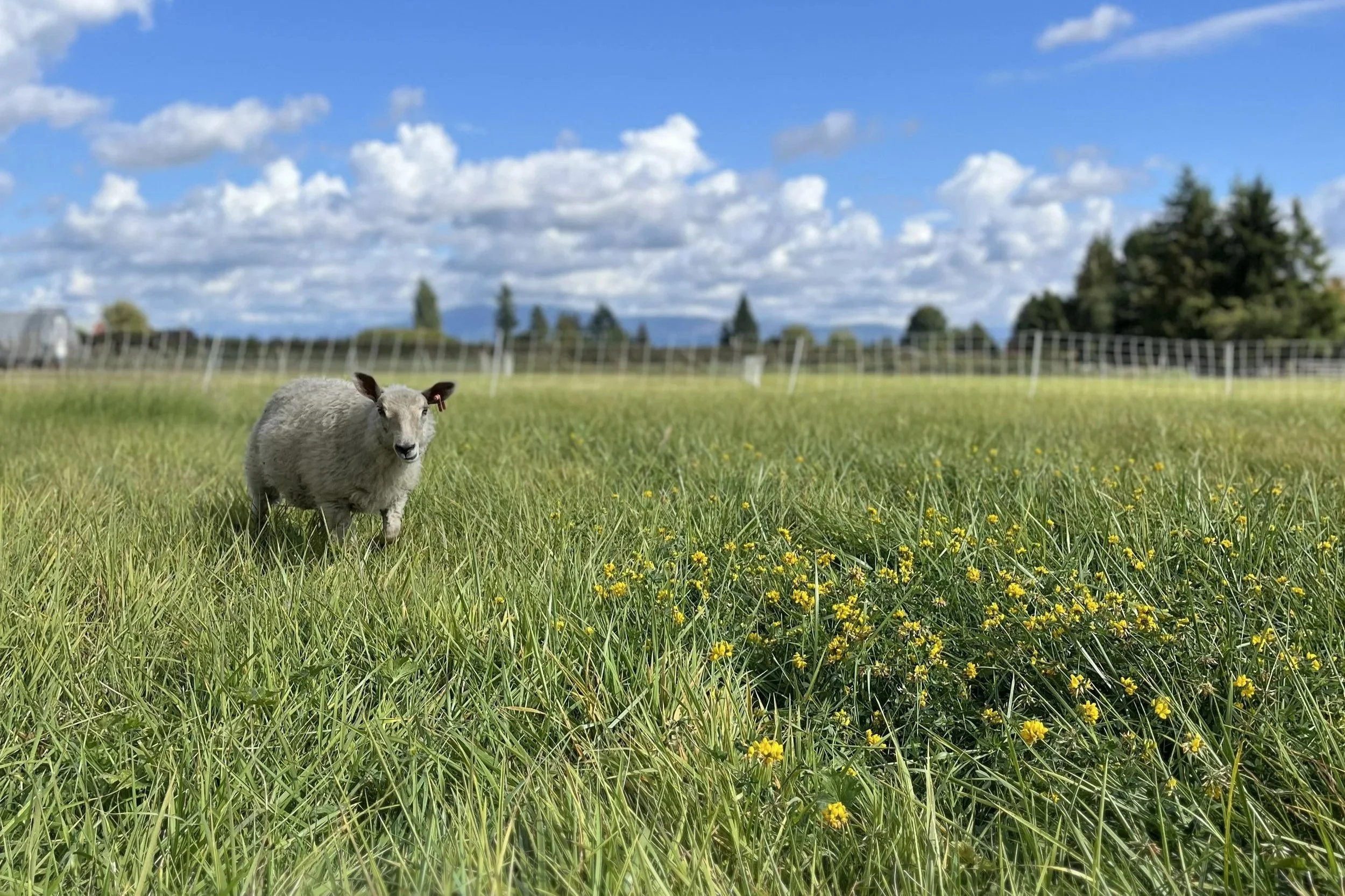
The Sheep
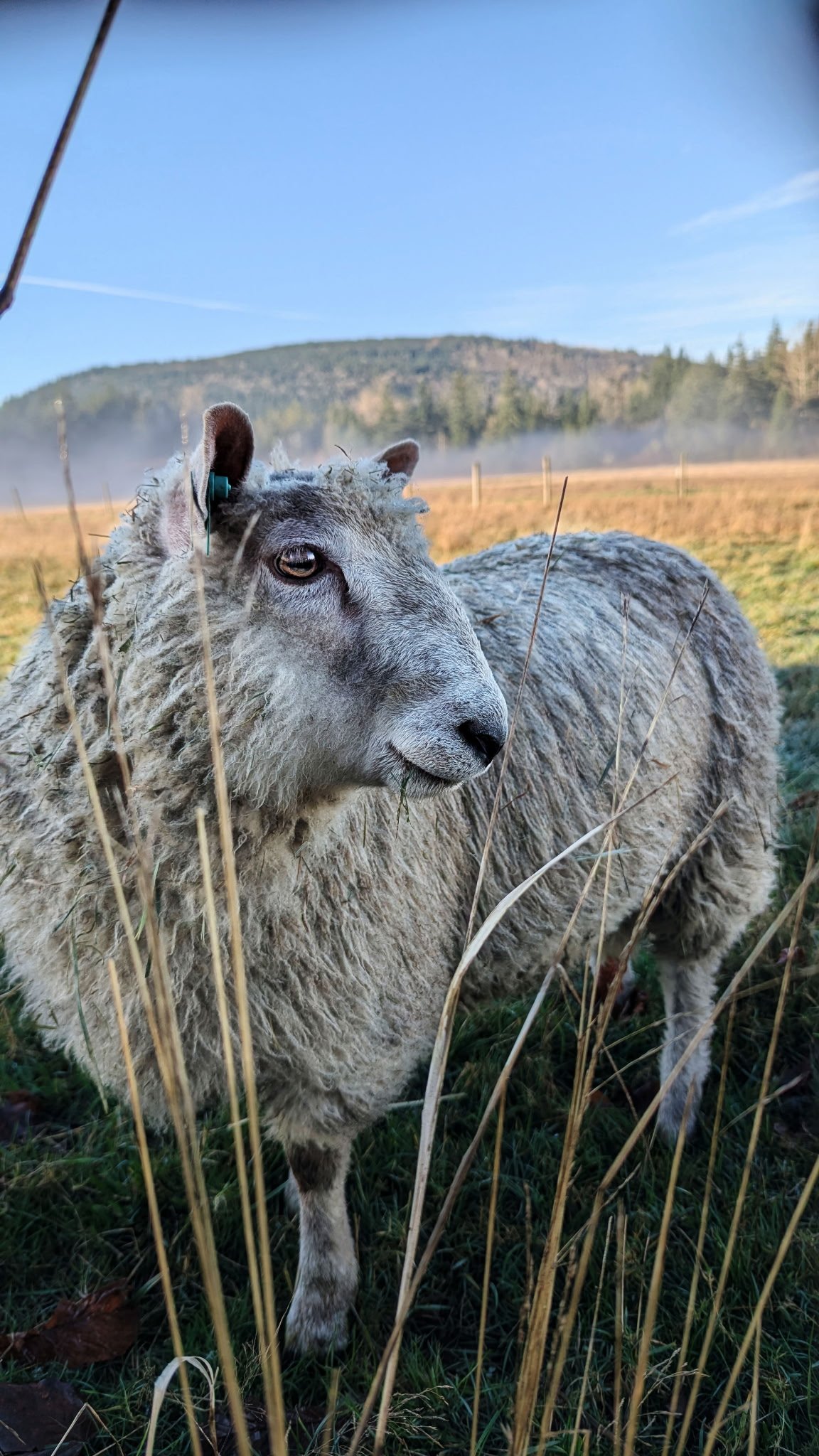
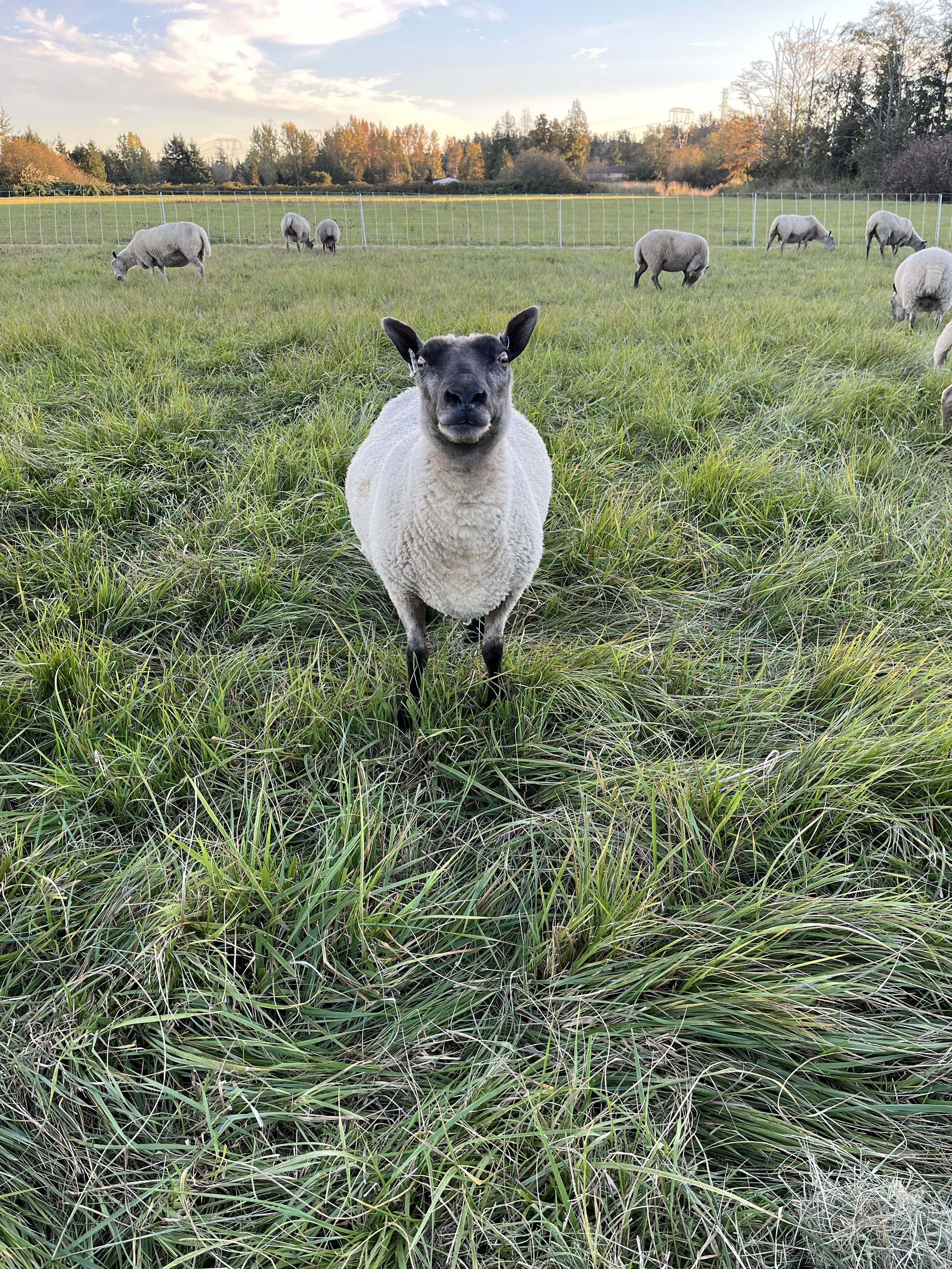
Our mule-eared sheep are Avondales, a 4-way meat cross bred and refined to thrive on Pacific Northwest pasture.
Bred by Snoqualmie Valley Lamb, the only certified organic, 100% grass-fed prime lamb operation on the west coast, Avondales were selected for the traits that matter most in a pasture-based system: easy lambing, attentive mothers, sound feet, and excellent gains on pasture.
The flock is primarily built from two of the breeds that define the UK mule sheep; Clun Forest and Bluefaced Leicester. The addition of New Zealand Suffolk and New Zealand Texel adds muscle, growth, and carcass quality in pursuit of prime lamb traits. The result is a medium to large-frame sheep that thrives on forage and produces consistently outstanding lamb.
While our focus is on meat quality, every sheep also grows a valuable fleece adapted to ward off our damp, rainy winter months. We sell their fiber through Farmers Flock, where it can be matched with makers who can put it to its highest use. Our sheep skins are bark tanned locally by Marley Roane at Nine Lives Ranch.
“I didn’t take a plating photo because I am here eating with my hands like a caveman. The fat flavor is excellent.”
—Review of LLL Rib Chops